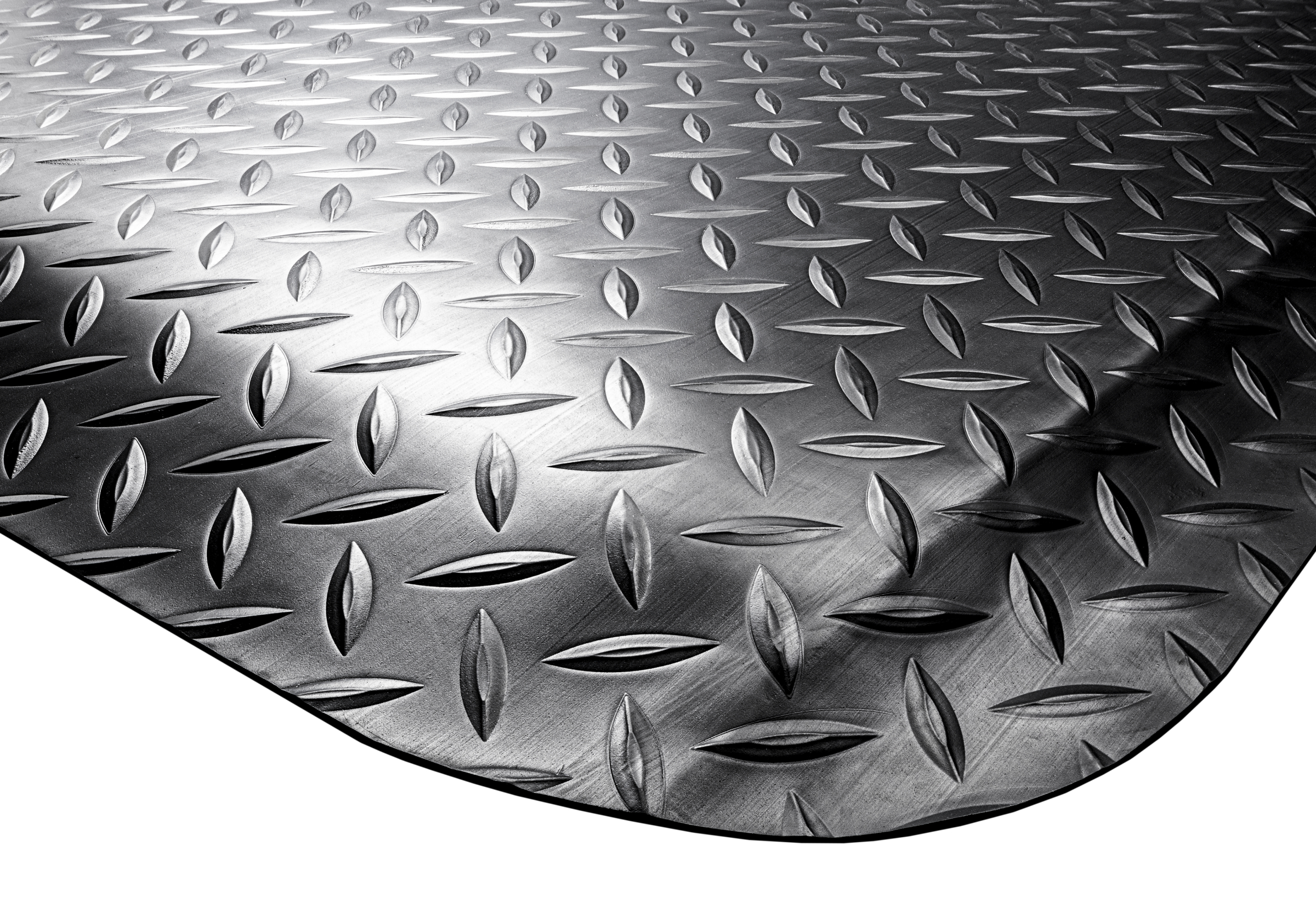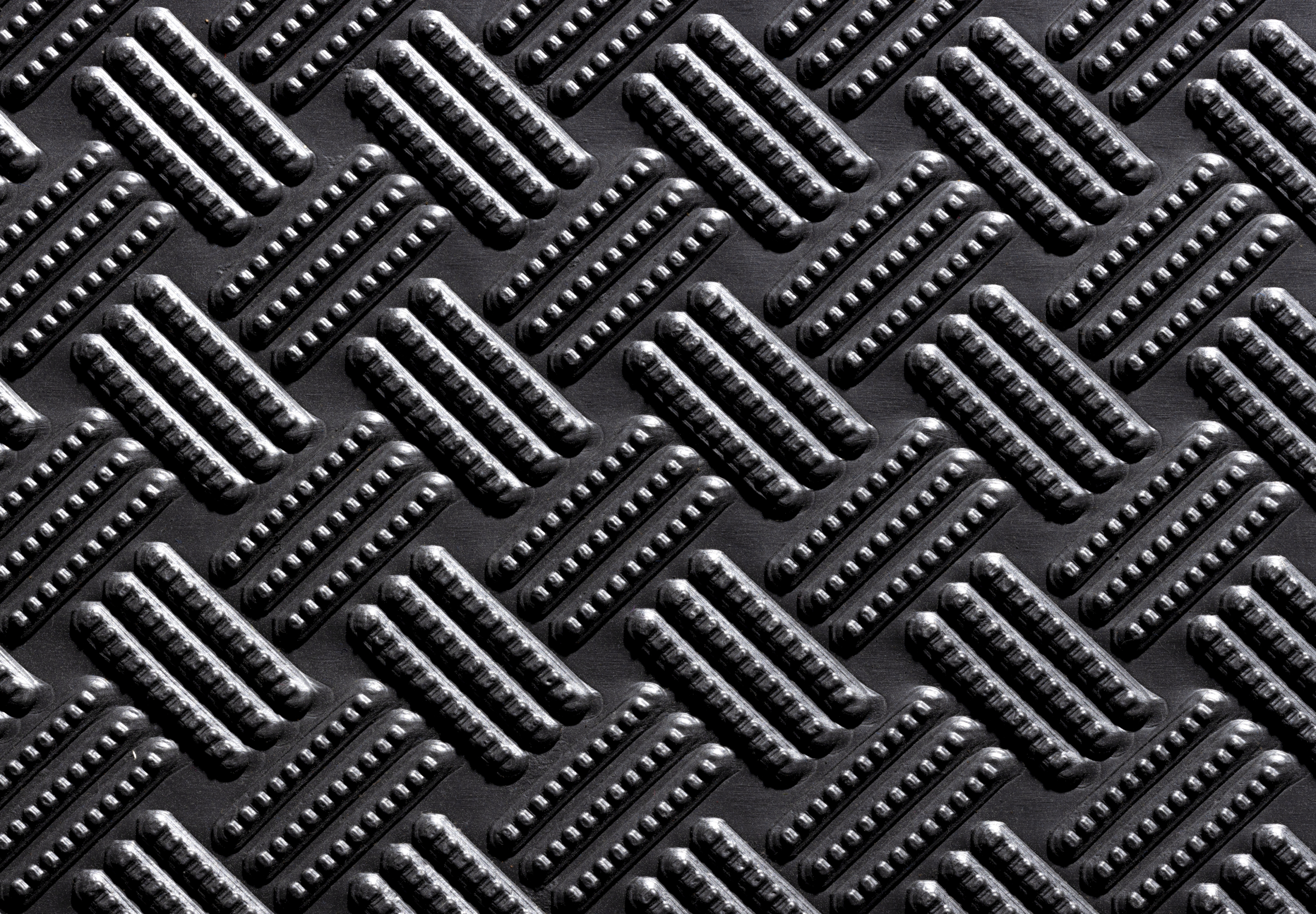
Why working while standing in the office is different than you think

An increasing number of offices are investing in sit-stand desks driven by occupational health policies, a focus on well-being, and the desire to reduce sedentary time among employees. While this is a positive development, it often falls short of the full solution. A sit-stand desk may solve the problem of excessive sitting, but it simultaneously creates a new issue: standing for too long on a hard floor. And that is precisely where many offices miss the mark.

On a production floor or behind a service counter in the hospitality industry, it has become standard practice to use an anti-fatigue mat when standing for long periods. In the office, however, there is hardly any awareness of this. Yet the same principle applies. Concrete beneath laminate, tiles in a kitchenette or reception area, or hard vinyl flooring offer no cushioning whatsoever. The body has to absorb that strain itself in the feet, knees, and lower back.

The difference compared to a factory setting is primarily a matter of perception. Working at a sit-stand desk while standing for two to four hours a day does not feel extreme, yet the physical impact accumulates. Just as with standing work in the industrial sector, the rule applies: the harder the surface, the sooner fatigue and physical complaints set in.
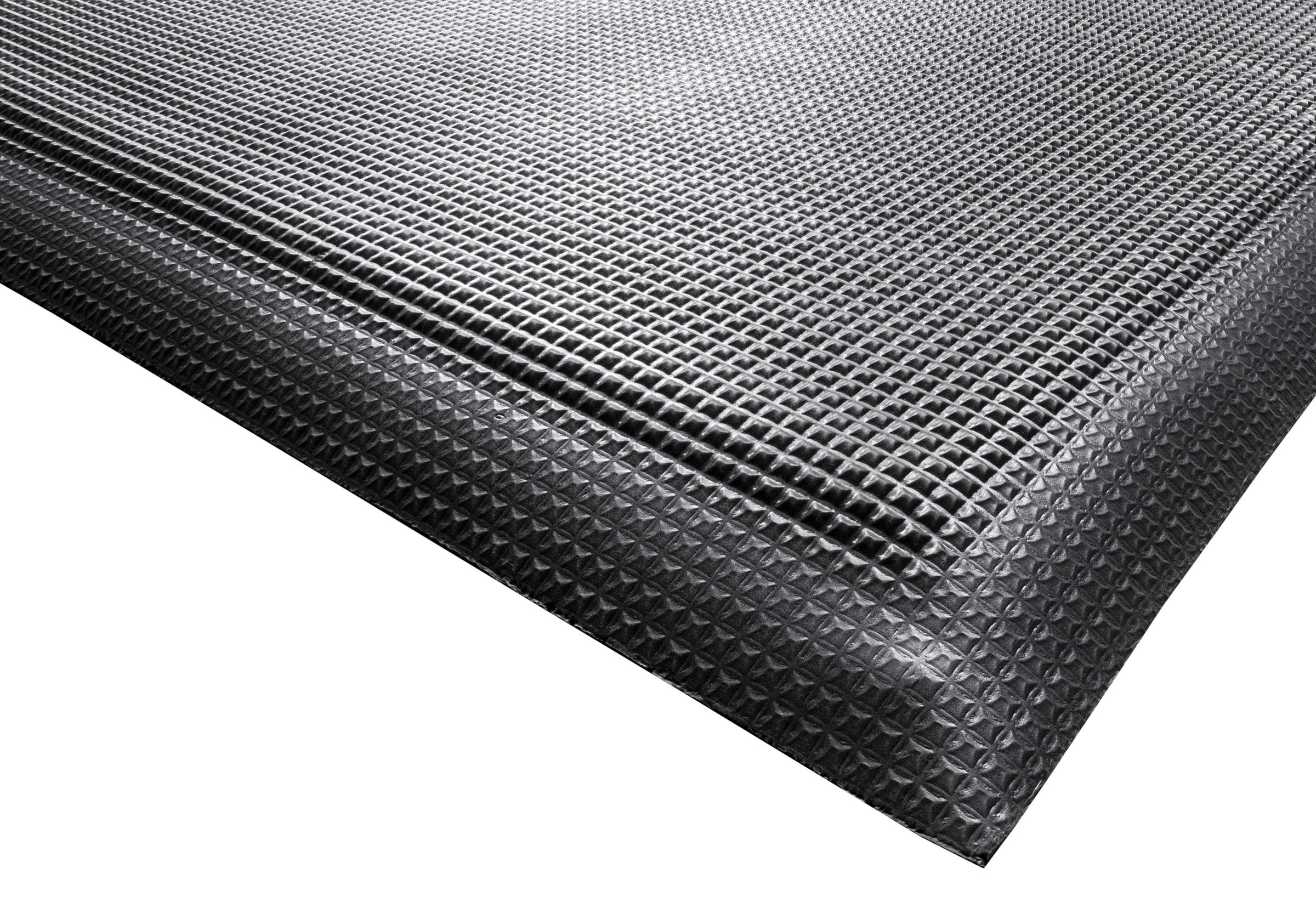
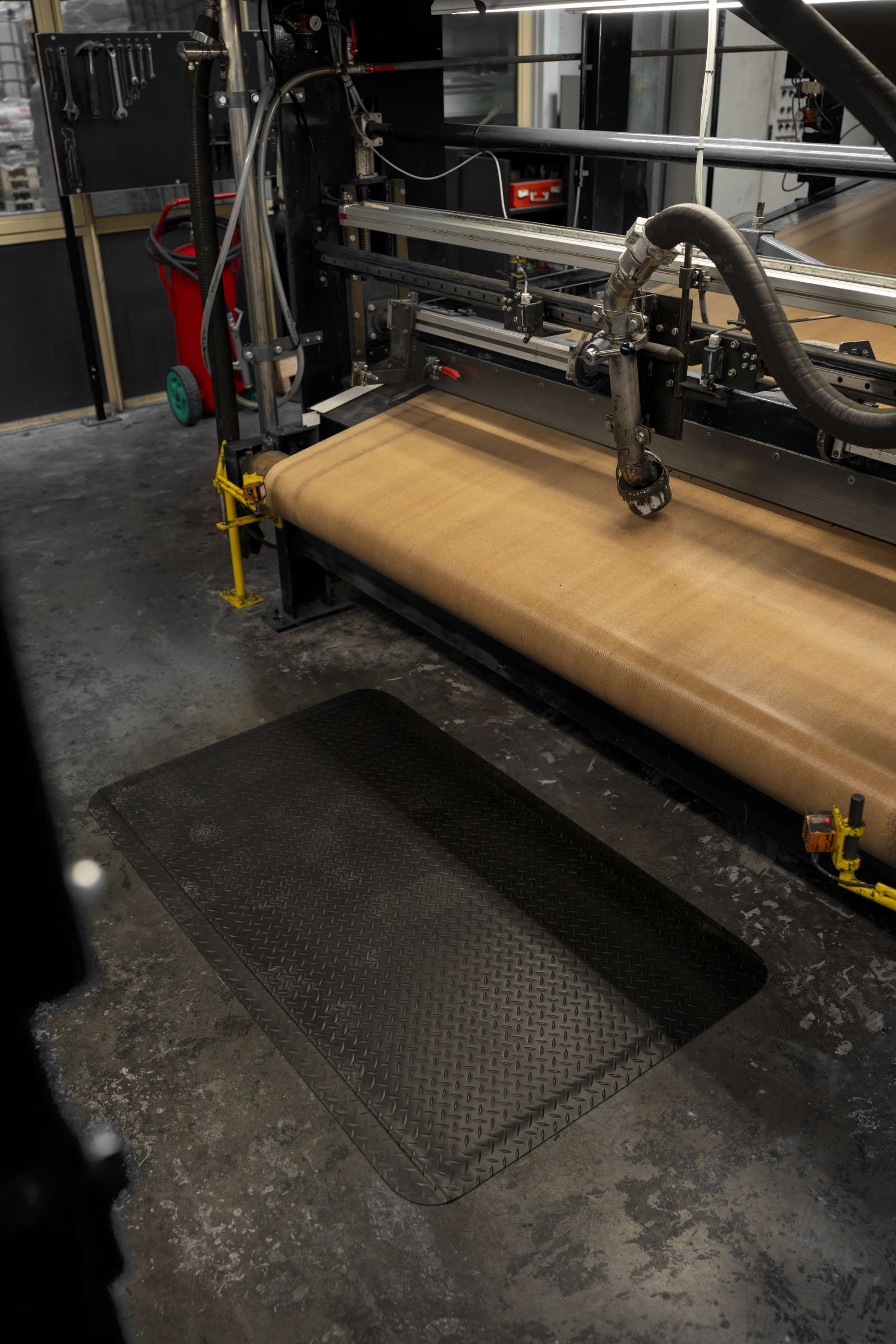
Standing for a few hours isn't a big deal, is it?

Most offices that purchase a sit-stand desk assume that comfort is thereby taken care of. After all, the desk is adjustable, allowing employees to decide for themselves how long they stand. However, an adjustable desk says nothing about the surface on which a person stands. Without a cushioned mat, employees often realize only after a few weeks that working while standing is less comfortable than expected, and they unconsciously revert to sitting. This negates the very benefit for which the sit-stand desk was purchased.

What an anti-fatigue mat solves in the office

An anti-fatigue mat placed under a sit-stand desk promotes micro-movements in the feet and improves weight distribution. This reduces pressure on joints and muscles, allowing employees to stand comfortably for longer periods. The result is that the sit-stand desk is actually used as intended, rather than simply remaining in its lowest position after a few months.

Different requirements apply to office environments than to a production floor:

  • Compact size that fits under a desk; not the dimensions of workshop mats.
  • A subtle design a mat that suits an office interior, not a factory floor.
  • Lightweight and easy to move practical for flexible workspaces or alternative desk layouts.
  • Office floors that are easy to clean, are subjected to different stresses than industrial floors, yet hygiene remains important.

Flexible workspaces: why a mat is also becoming a hygiene item

In offices with flexible workspaces, a single desk is used by multiple people on different days. Just as keyboards or chairs are often viewed as personal items, a dedicated anti-fatigue mat can serve the same purpose. It ensures a consistent, comfortable experience regardless of which workstation a person uses that day preventing the comfort of standing work from being left to chance.

How to choose the right mat for an office environment

Different factors come into play when choosing an anti-fatigue mat for the office compared to an industrial setting:

  1. Thickness and cushioning provide sufficient springiness without feeling unstable while typing.
  2. Material: polyurethane or foam with a pleasant, non-industrial look and feel.
  3. A beveled edge prevents tripping, even when office chairs roll over it.
  4. Easy to clean; resistant to dust and daily use.

Conclusion

A sit-stand desk is an investment in employee well-being, yet without the right underfoot support, that investment is only half-realized. Anyone serious about working while standing in the office looks beyond the desk itself to the flooring beneath it. Consequently, an anti-fatigue mat is no longer merely an industrial accessory, but a logical component of modern office furniture.

Contact us or request the test data to make the right choice.

Test data