Employees who spend hours on their feet every day experience greater fatigue, more physical complaints, and reduced concentration. A good anti-fatigue mat solves this, but what exactly makes an ergonomic mat effective?
Standing for long periods is harder than it looks.
In sectors such as retail, hospitality, manufacturing, and healthcare, employees frequently spend 6 to 8 hours a day on their feet. Standing on hard surfaces such as concrete, tile, or wood has consequences: leg and back fatigue, reduced concentration, and an increased risk of joint and spinal problems.
Research shows that standing on a hard floor causes noticeable fatigue after just 90 minutes. An anti-fatigue mat reduces this strain by distributing pressure more effectively and encouraging the small muscle movements that keep blood circulating. For employees working at a checkout, in a salon, or on a production line, a high-quality anti-fatigue mat makes a real difference.
| 54% | Reduced fatigue-related complaints with the right ergonomic mat | R10 – R11 |
How does an anti-fatigue mat work?
An anti-fatigue mat works through resilience and cushioning. The slightly unstable surface continuously engages the muscles in the legs and torsosubtly, yet enough to promote blood circulation and prevent static load.
It is important that the mat rebounds sufficiently after being subjected to a load. Independent tests by TÜV Rheinland measured that a high-quality anti-fatigue mat rebounds to a residual indentation of barely 0.10 mm after static loading. An economy version scores slightly higher at 0.61 mm—still functional, but a measurable difference for high-intensity environments.
Base+ mats have been tested by TÜV Rheinland Netherlands for wear resistance, slip resistance, antistatic properties, and chemical resistance, so you know exactly what you are buying.
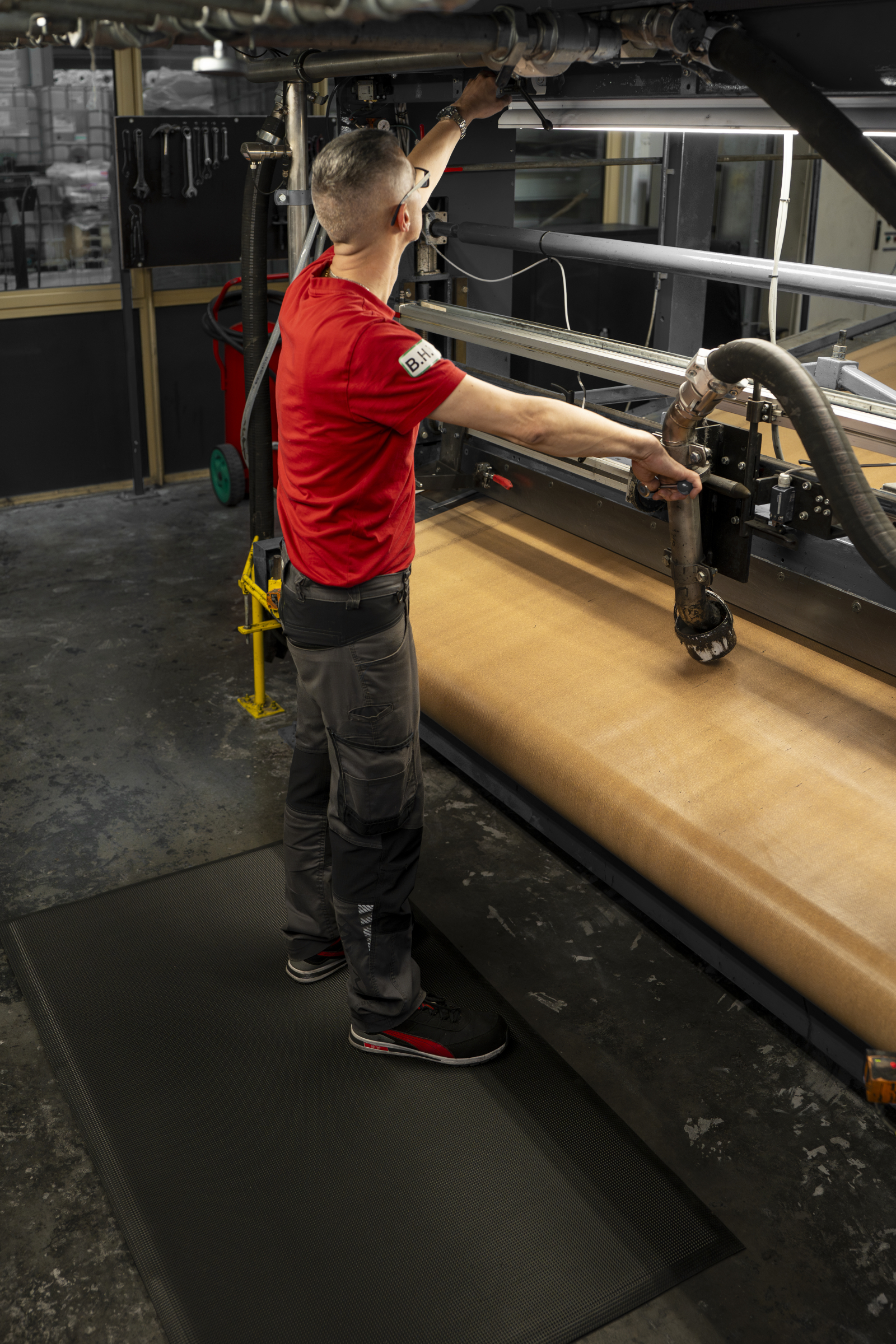
What are the benefits of an anti-fatigue mat?
An anti-fatigue mat offers various benefits for employees who work while standing for extended periods. The active muscle support reduces static strain on the joints and lower back, noticeably alleviating fatigue associated with standing work. This makes the mat suitable for employees in the hospitality, retail, and industrial sectors, where prolonged standing is often part of daily operations.
In addition, an anti-fatigue mat contributes to a safer working environment. Thanks to its R10 to R11 slip resistance rating, the mat offers excellent grip, even in damp or slippery conditions.
Better concentration and higher productivity
Reduced physical fatigue leads directly to greater focus and fewer errors a measurable difference in workplace productivity. An anti-fatigue mat is not only a comfortable solution but also a durable investment. Thanks to its high wear resistance tested at 4,100 cycles and resistance to cleaning agents, the mat lasts for years while requiring minimal maintenance.
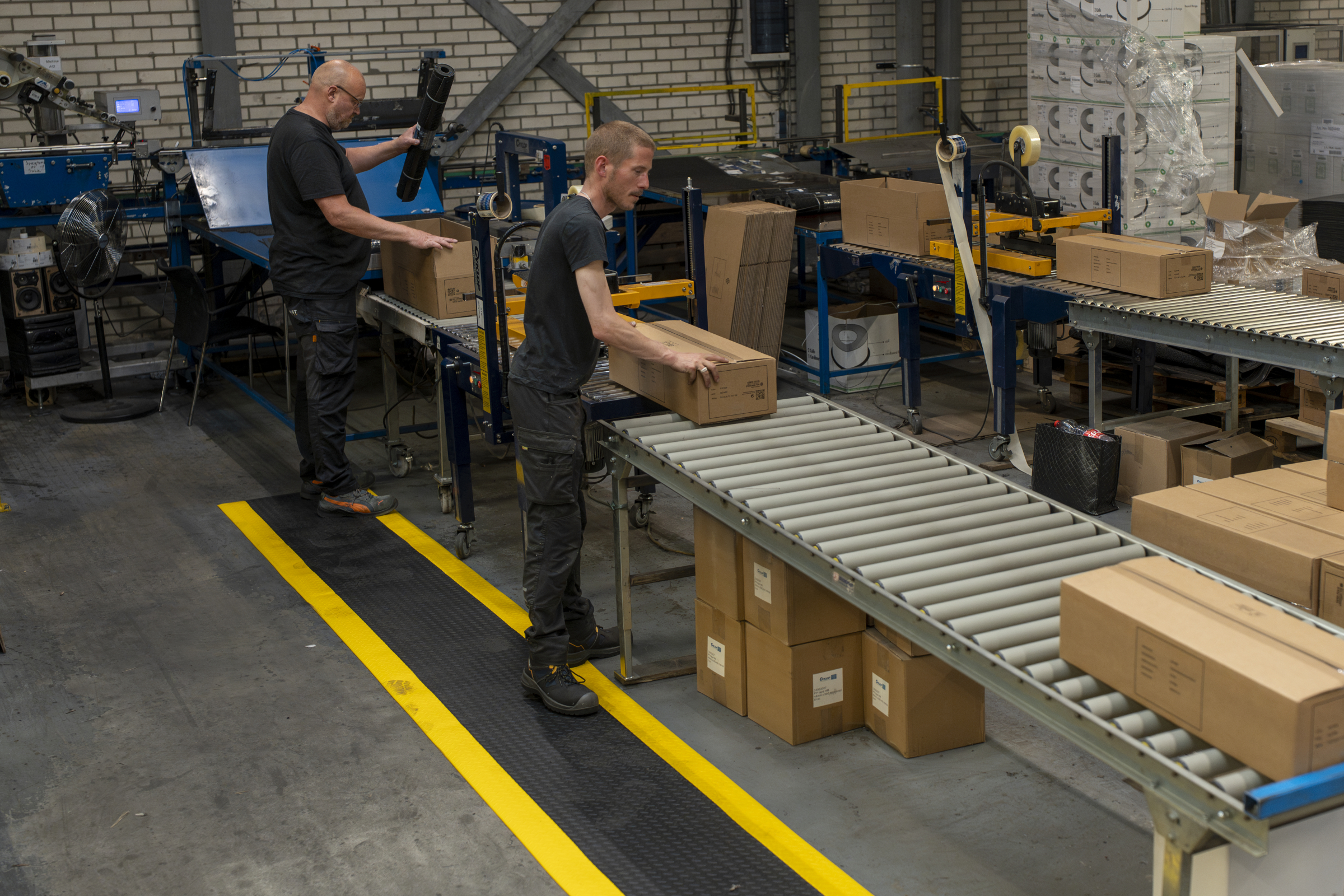
What do you look for when choosing an anti-fatigue mat?
Not every mat is suitable for every application. Consider the following factors:
– Wear resistance is important under high loads in production environments and warehouses.
– Anti-slip class R10 or higher for areas with moisture, oil, or slippery floors
– Chemical resistance suitable for the hospitality industry and industrial environments involving cleaning agents, acids, and solvents.
– Anti-static version required where electronics are manufactured or there is a risk of explosion (max. 2.0 kV)
Purchasing an anti-fatigue mat is not a major undertaking, yet the impact on employee well-being is real and measurable.
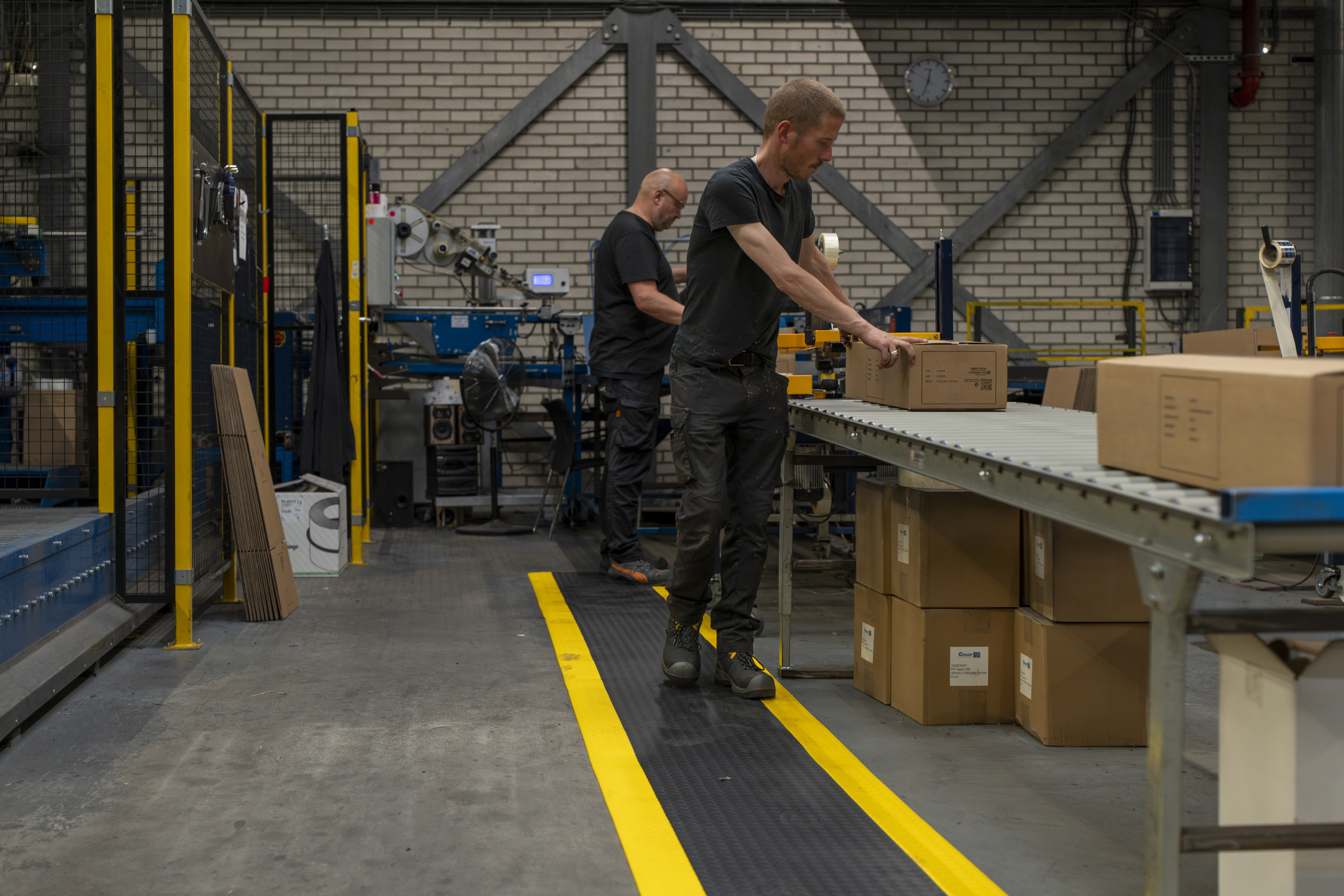
Why choose an anti-fatigue mat from Base+?
Reduced fatigue when working while standing, lower absenteeism, a safer workplace, and greater focus: these are benefits that directly support your organization’s operational continuity.
View the full Base+ range and discover which ergonomic mat best suits your work environment.